
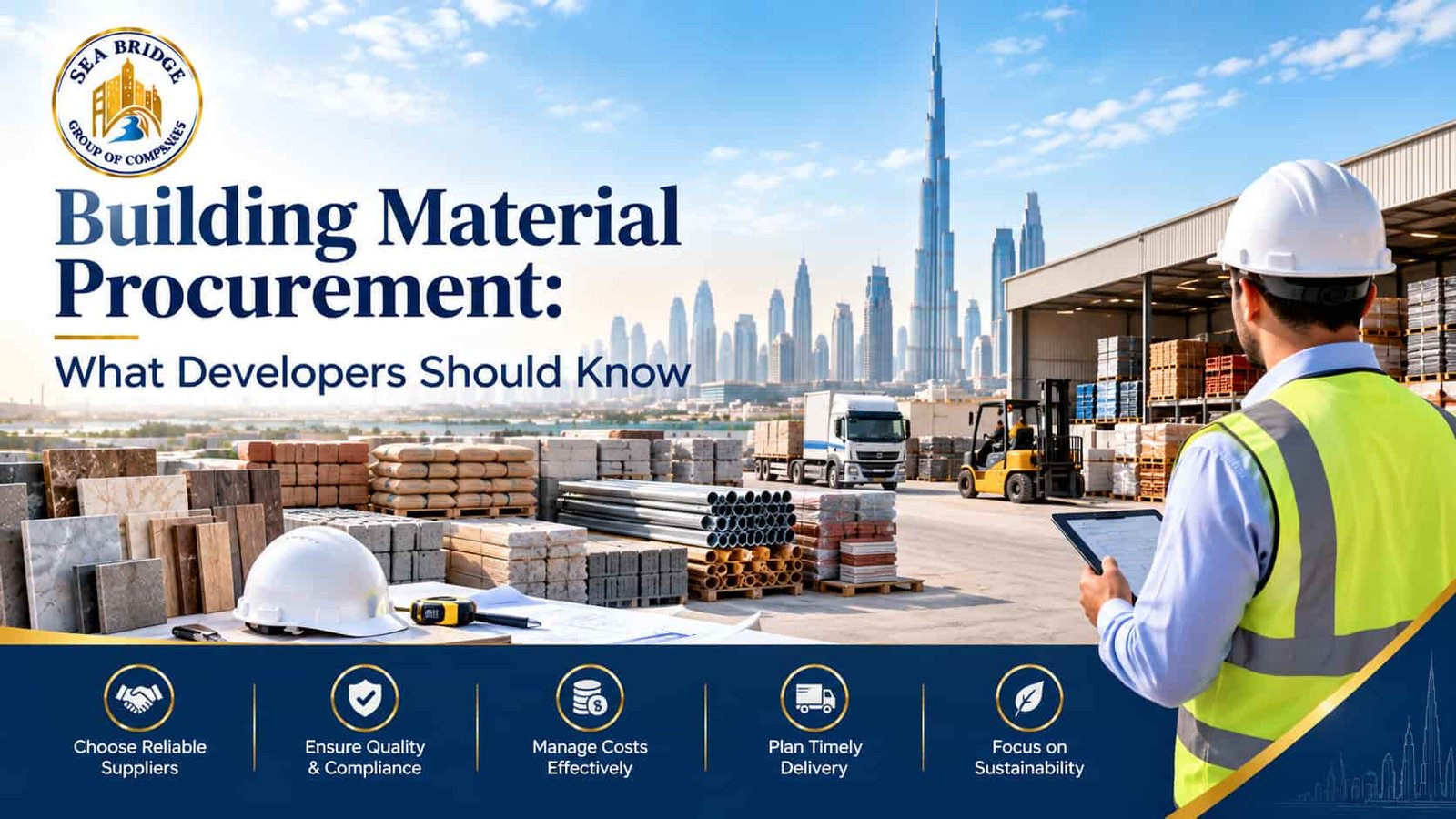
Building Material Procurement: What Developers Should Know
Introduction
Efficient building material procurement is an important part of successful construction project management. For developers, contractors and project managers in Dubai, materials need to be available at the right quality, quantity and time.
Poor procurement planning can lead to material shortages, delays and unexpected costs. A structured procurement process helps keep construction activities moving according to the project schedule.
1. Start With Clear Material Specifications
Before purchasing materials, project requirements should be clearly defined.
Specifications may include:
- Product type
- Dimensions
- Grade and performance
- Quantity
- Finish and appearance
- Technical requirements
- Applicable standards
Clear specifications reduce the risk of ordering unsuitable products and help suppliers understand exactly what the project requires.
2. Choose Reliable Suppliers
Supplier selection is an important part of procurement.
Developers should consider factors such as:
- Product quality
- Previous project experience
- Product availability
- Delivery capability
- Technical support
- Consistency of supply
- Overall value
A reliable building material supplier in Dubai can help simplify procurement and coordinate materials according to project requirements.
The supplier’s ability to maintain consistent quality and supply can also be important when materials are required across multiple construction stages.
3. Plan Procurement Around the Project Schedule
Construction materials should arrive when they are needed—not too early and not too late.
Early procurement planning can help identify long-lead materials and allow sufficient time for sourcing, transportation and delivery.
This is especially important for large projects where multiple construction activities depend on material availability.
Coordinating procurement with the construction schedule can help reduce the risk of material shortages affecting site progress.
4. Look Beyond the Purchase Price
Material procurement should not be based only on the quoted unit price.
Developers should also consider:
Product Quality + Delivery + Installation Requirements + Wastage + Maintenance + Long-Term Value
A slightly higher-quality material may provide better overall value if it is more suitable for the application or helps reduce maintenance or replacement requirements.
The objective should be to select materials that provide an appropriate balance between quality, cost and project requirements.
5. Consider Storage and Logistics
Once materials arrive on site, proper handling and storage are also important.
Materials should be delivered according to site conditions and stored appropriately to reduce damage, wastage and unnecessary movement.
Good coordination between suppliers, logistics teams and site management can improve material flow throughout the project.
Storage requirements should also be considered during procurement planning, particularly when materials need to be delivered before they are immediately required.
6. Maintain Quality Control
Material quality should be checked before and during use.
Depending on the product, this may involve reviewing:
- Product specifications
- Delivery quantities
- Technical documents
- Certifications
- Physical condition
- Compatibility with project requirements
Proper quality control helps prevent unsuitable materials from affecting construction progress.
Clear documentation and inspection procedures can also help project teams verify that delivered materials correspond with the approved requirements.
7. Work With an Integrated Construction Partner
Procurement becomes more efficient when material requirements are coordinated with engineering and site execution.
An integrated construction partner can better understand project requirements and coordinate materials with actual site activities.
This approach can help connect material selection, procurement, delivery and construction requirements rather than treating procurement as a separate activity.
Building Material Procurement Checklist
Before procuring materials, developers and project teams should consider:
- Specifications: Are the required products and technical specifications clearly defined?
- Quality: Do the materials meet the project’s requirements?
- Supplier: Can the supplier provide consistent quality and supply?
- Availability: Are materials available when required?
- Delivery: Can delivery be coordinated with the construction schedule?
- Logistics: Are transportation and site storage requirements understood?
- Quality Control: Will materials be inspected and documented?
- Overall Value: Has the decision considered more than the initial purchase price?
Conclusion
Effective building material procurement in Dubai requires careful planning, reliable suppliers, quality control and coordination with the construction schedule.
By defining specifications clearly, selecting appropriate suppliers, planning deliveries and considering quality alongside cost, developers and contractors can create a more structured procurement process.
For construction projects, material procurement is not simply about purchasing products. It is about ensuring that the right materials are available, at the right quality and at the right time, according to project