
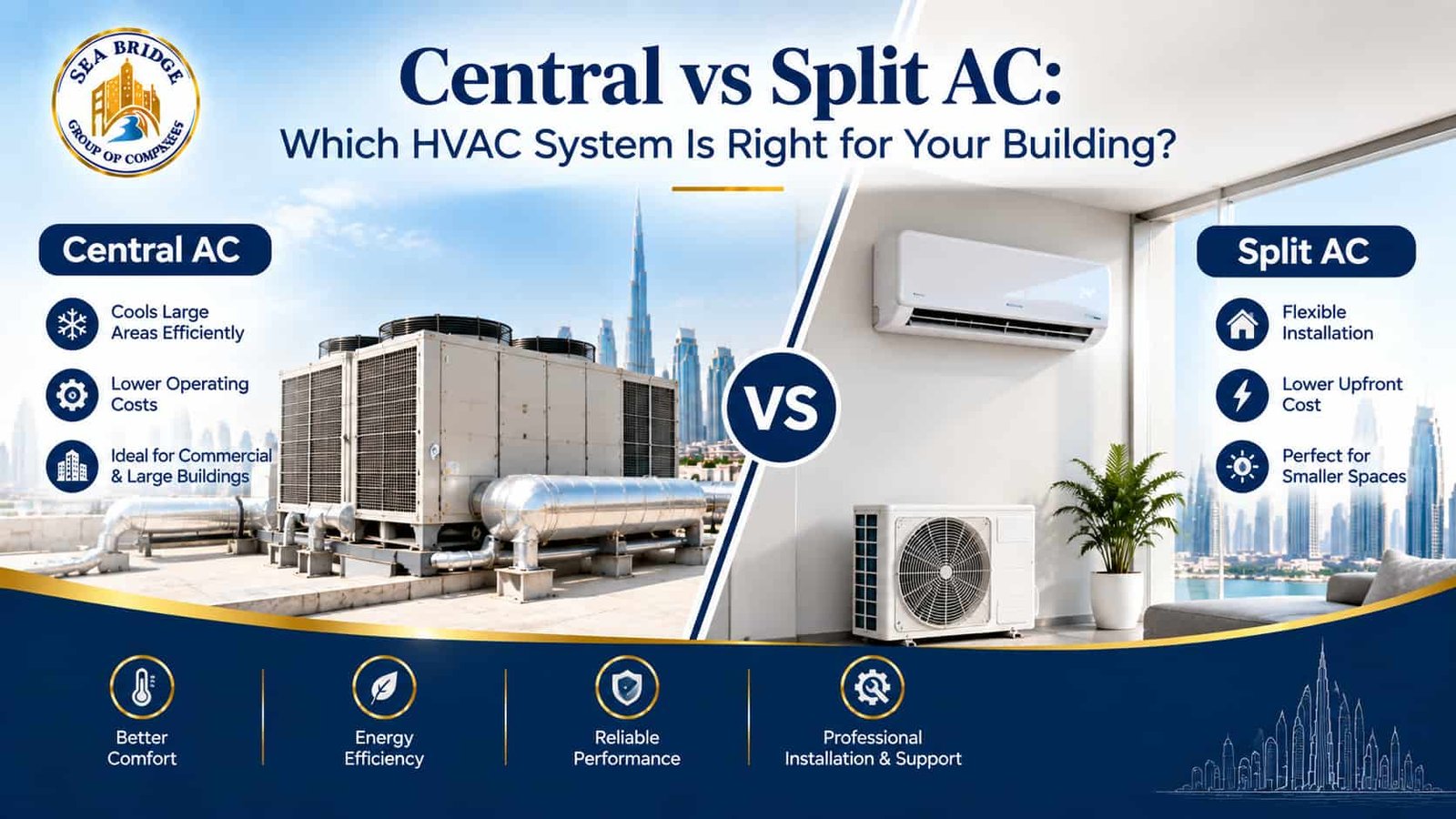
Central vs Split AC: Which HVAC System Is Right for Your Building?
Introduction
Choosing between central AC and split AC is a common consideration for property owners, developers and contractors in Dubai. Both systems can provide effective cooling, but they are designed for different building layouts and requirements.
Understanding the differences can help you select an HVAC solution that matches your building size, layout, usage, budget and expected cooling requirements.
1. What Is Split AC?
A split AC system generally consists of an indoor unit and an outdoor condensing unit connected to provide cooling for an individual space or designated area.
Split systems are commonly used for:
- Villas
- Apartments
- Individual rooms
- Small offices
- Smaller commercial spaces
They can be suitable when independent cooling of individual rooms or areas is required.
One of the main considerations with split AC systems is that each space can have its own cooling requirements and operating schedule.
2. What Is Central AC?
A central air conditioning system is designed to provide cooling across multiple areas through a coordinated system.
Depending on the building and system design, central systems may use ductwork or other distribution methods to deliver conditioned air to different spaces.
They are commonly considered for:
- Large villas
- Offices
- Commercial buildings
- Hotels
- Large residential developments
Central HVAC systems generally require more extensive planning because multiple spaces and system components need to work together.
3. Installation Requirements
Split AC systems can generally be installed on a room-by-room basis, while central systems require more extensive planning and coordination.
Central HVAC installations may involve:
- Ductwork
- Air handling equipment
- Controls
- Refrigerant or chilled-water systems
- Mechanical rooms
- Ventilation
- Electrical coordination
For new construction projects, HVAC design should ideally be coordinated during the engineering stage.
This allows the HVAC requirements to be considered alongside the building layout, available service spaces and other building systems.
4. Energy and Operating Considerations
Energy consumption depends on many factors, including:
- Equipment efficiency
- Building insulation
- Usage patterns
- Cooling load
- System controls
- Building design
Central systems can provide coordinated zoning and control for larger buildings when properly designed.
Split systems can provide flexibility when individual spaces have different operating requirements and do not need to be cooled continuously.
The actual operating performance of either system depends on the selected equipment, system design, installation quality and how the building is used.
5. Maintenance Requirements
Both central and split AC systems require regular maintenance to support reliable operation and cooling performance.
Maintenance may include:
- Filter cleaning or replacement
- Coil cleaning
- Refrigerant checks
- Electrical inspections
- Drainage checks
- System performance testing
Central systems may involve additional components such as ductwork, air handling equipment and controls that need to be inspected as part of the overall HVAC system.
Regular servicing can help identify potential problems early and maintain system performance.
6. Which System Should You Choose?
There is no single HVAC solution for every building.
A split system may be appropriate for smaller spaces requiring independent room cooling, while a central HVAC system may be considered for larger buildings where multiple areas need coordinated cooling.
The final selection should be based on factors such as:
- Building size
- Cooling loads
- Building layout
- Intended use
- Budget
- Energy requirements
- Installation requirements
- Future maintenance
A professional HVAC assessment can help determine which system configuration is appropriate for the specific building.